When Do Babies Get Their First Teeth? A Teething Guide

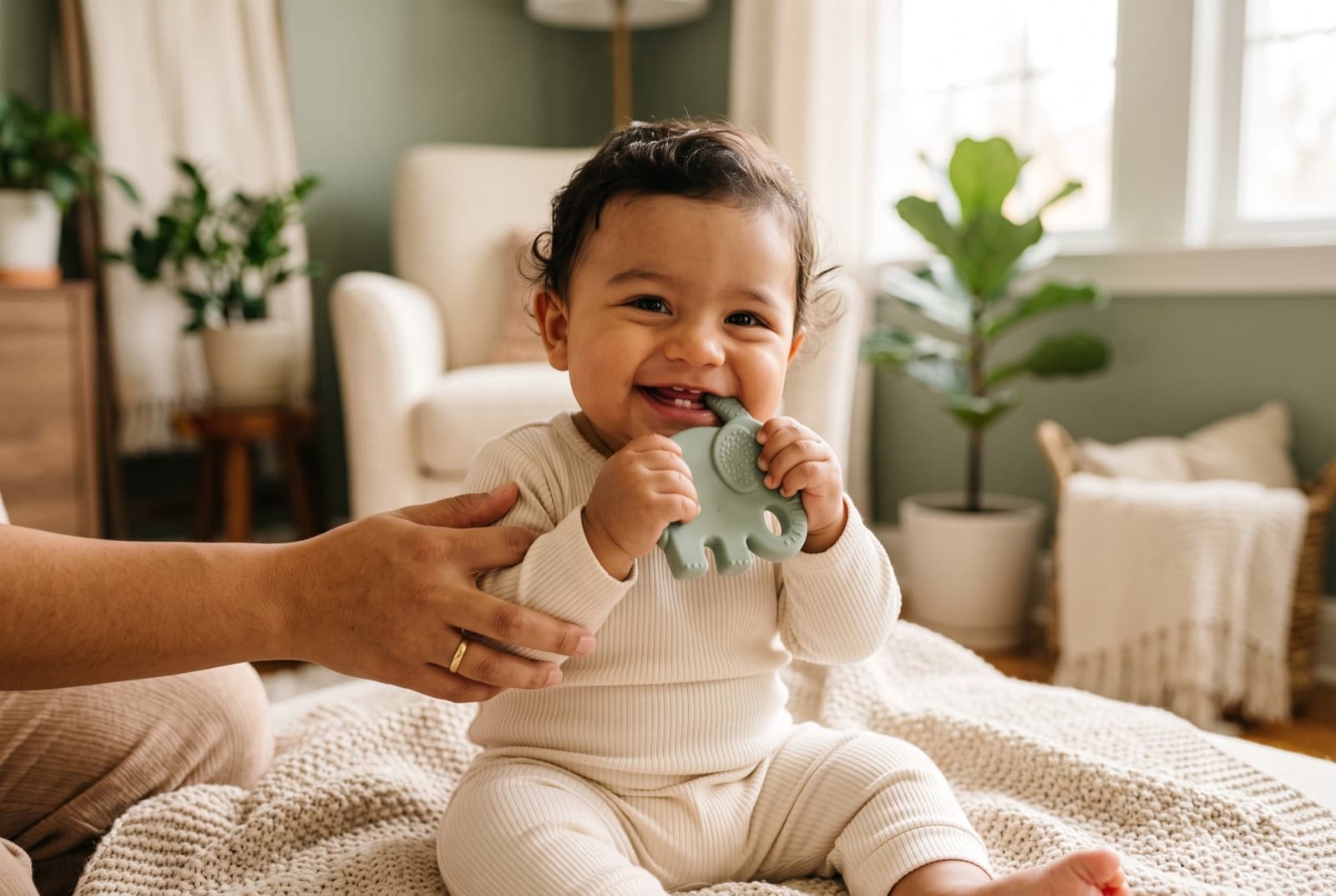
At Bites Odontopediatría in Vitacura, one of the most frequent questions from first-time parents is about teething: when the teeth will come in, what's normal and what isn't. It's a stage that raises many doubts and, at times, unnecessary anxiety. I'm Dra. Florencia Nogueira, pediatric dentist, and in this guide I'll walk you through what's worth knowing so you can support your little one with peace of mind.
When the first teeth appear
The first tooth erupts on average between 5 and 7 months. The normal range, however, is wide: some children show their first tooth at 4 months and others as late as 14 months. Both situations are normal, and the right response is not to worry and to wait.
What matters is not the exact date, but that the process follows a certain order within an acceptable range. If your baby reaches 18 months and no tooth has appeared, an evaluation is worthwhile, but most of the time it's simply a slower calendar, not a problem.
In what order they come in
Baby teeth tend to appear in a fairly predictable sequence:
- Lower central incisors (the two bottom front teeth): 6 to 10 months.
- Upper central incisors (the two top front teeth): 8 to 12 months.
- Lateral incisors (next to the centrals): 9 to 13 months.
- First molars: 13 to 19 months.
- Canines: 16 to 22 months.
- Second molars: 23 to 33 months.
The complete baby dentition is 20 teeth, usually in place around age 2 and a half to 3. Small variations in order or timing are completely normal. Later on, when they start falling out to make way for the permanent teeth, I cover that in when do kids lose their baby teeth.
Which symptoms are normal and which are not
Teething has a reputation for causing all kinds of trouble, so it helps to separate what it actually causes from what it doesn't.
Normal during teething:
- More drooling than usual.
- Wanting to chew on everything.
- Somewhat swollen, sensitive gums where a tooth is about to break through.
- More irritability in the days before the tooth appears.
- Slightly more restless sleep on those days.
Not teething (and worth a pediatrician visit):
- High fever.
- Significant diarrhea.
- Marked listlessness or refusing to feed.
This point matters: for years, almost any discomfort in a baby was blamed "on the teeth," and that sometimes delays the diagnosis of another cause. Teething can cause local discomfort and some irritability, but not illness. If your baby has a fever or seems unwell, don't automatically attribute it to teething.
How to relieve the discomfort safely
What works best is simple:
- Something cold and firm to chew on: a teether chilled in the refrigerator (never the freezer, since something too hard can hurt) or a clean, cool cloth.
- A gentle gum massage with a clean finger.
- Gengigel or other hyaluronic acid gels to support the healing of the small opening the tooth leaves as it erupts.
What to avoid:
- Amber necklaces: there's no evidence they help, and they pose a real choking and strangulation risk. Pediatric societies advise against them.
- Anesthetic gels without medical indication: some contain substances not recommended for babies.
If the discomfort seems significant, talk to your pediatrician or pediatric dentist before giving any medication.
Hygiene starts with the first tooth
The moment the first tooth appears, care begins. From then on you can use a soft-bristled infant toothbrush with a minimal amount of fluoride toothpaste (a rice-grain-sized smear for children under 3). There's no need to wait for all the teeth before you start brushing.
If you want to go deeper into preventing cavities from the start, there's our guide with 10 practical tips.
The first dental visit
At Bites we recommend the first pediatric dental visit at the first birthday or when the first tooth appears, whichever comes first. That first appointment is short, conversational, and procedure-free: we hand your child a toothbrush, check development, answer questions about hygiene and feeding, and help your baby's relationship with the dentist start off right. I cover it in detail in the first-visit guide.
When to consult
Come in if your baby reaches 18 months without a single tooth, if something about the shape or color of the incoming teeth worries you, or simply if you have questions about the process. Teething is a normal stage of development, and going through it with good information makes all the difference.

Written by
Dra. Florencia NogueiraCo-founder · Pediatric Dentist · Clinical Director
Dr. Florencia Nogueira is a pediatric dentist and Clinical Director of Bites. A pioneer of laser pediatric dentistry in Chile, dedicated to creating positive experiences for the youngest patients, from infancy onwards.
Bites Odontopediatría · Vitacura, Santiago