Conscious sedation with nitrous oxide in children

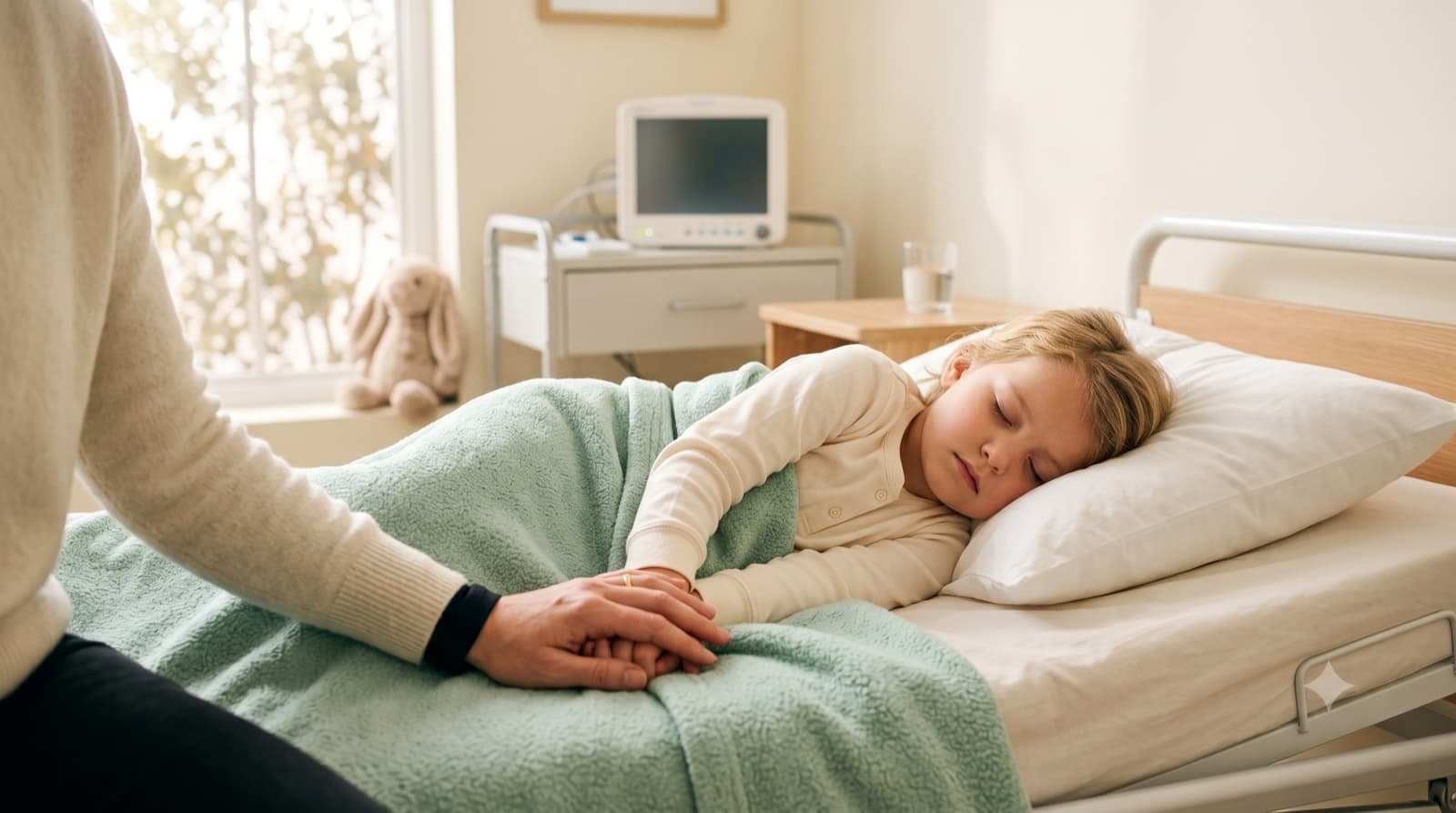
When I say "sedation" in the clinic, most parents picture the same thing: an unconscious child. It is not like that, or at least not in most of the cases we see. There are three distinct levels of sedation and each one is used for something different.
Minimal sedation with nitrous oxide keeps the child awake and cooperative, just with the anxiety turned down. This is what the article is about.
Moderate sedation with oral midazolam makes the child drowsy, though they still respond to stimuli. It is used in more complex cases, with specific protocols.
Outpatient general anesthesia puts the child fully to sleep in an accredited operating room, with a pediatric anesthesiologist alongside. It is the last resort, reserved for what cannot be managed any other way.
Nitrous oxide is the first line when behavioral management (tell-show-do, positive reinforcement, distraction) is not enough but the situation does not warrant the OR.
What it is
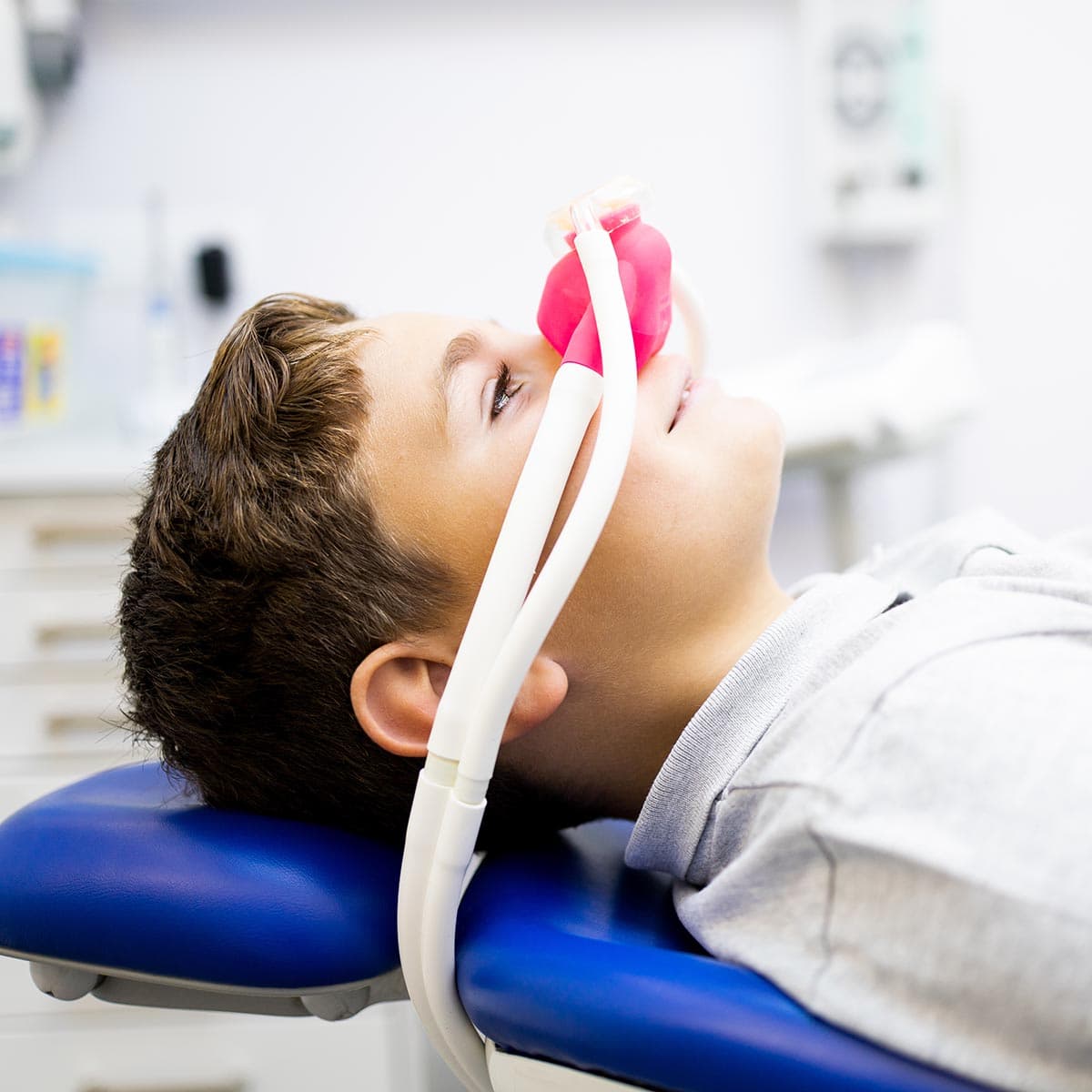
A colorless gas with a mild sweet smell. It is delivered mixed with oxygen (30 to 50% nitrous oxide, the rest pure oxygen) through a small nasal mask. It lowers the child's anxiety, gives a sensation of calm and slight detachment, raises the pain threshold and distorts the sense of time a little: sessions feel short.
The child stays awake, cooperative and able to talk. This is not general anesthesia.
When the procedure ends I switch the mix to 100% oxygen for 5 minutes. The effect is completely gone before the child walks out of the clinic. They can head back to school, the park, or practice. Nothing stays in the system.
When I use it
Not on every child. The scenarios where it makes sense are:
Moderate anxiety. Kids who do cooperate with behavioral techniques, but do so tense, carrying a lot of weight. Nitrous oxide lowers the stress and lets them associate the clinic with something less threatening for next time.
Long or multiple procedures. Fillings across several quadrants, pulpotomies, extractions. Keeping a child still and calm for 40 minutes without pharmacological help is not always realistic. It is also not fair.
Strong gag reflex. Some kids vomit just from the mirror. Nitrous oxide dampens that reflex and makes it possible to work without forcing them.
Past dental trauma. When there has already been a bad experience elsewhere. Rebuilding trust is a slow process, and nitrous oxide lowers the emotional load in the meantime.
Some special needs. Severe ADHD, clinical anxiety, ASD with sensory hypersensitivity. Always case by case, never generic.
When I do not use it
If the child has a cold or severe nasal congestion, the mask simply does not work: they cannot breathe through the nose. Same if there is untreated airway obstruction (enlarged adenoids, unevaluated sleep apnea), or a recent acute otitis media. Some specific neurological conditions require prior evaluation. And if the child flat-out refuses the mask, we do not force it. Protecting the relationship with the dentist matters more than finishing this one session.
Before indicating it I always do a short evaluation to rule out contraindications.
How the appointment goes, step by step
Before. A light fast two hours before: something small, no full meal. Comfortable clothes. Explain it to the child honestly: "you are going to breathe air that smells sweet and it will make you feel calm." No lies. Kids can tell, and trust is hard to get back. If they are little, let them bring their stuffed animal or blanket.
During. I put on the nasal mask (we have them in different colors and scents, strawberry and bubblegum are the favorites). The first 2-3 minutes are induction: the effect starts to set in. We do the procedure while the child is calm, and I monitor continuously: oxygen saturation, breathing, how they respond when I talk to them.
After. Five minutes of pure oxygen and the nitrous oxide clears. They sit up, walk normally, can eat, go to school, do sports. No restrictions.
What the evidence says
Nitrous oxide has one of the best-documented safety profiles in pediatric dentistry. The AAPD (American Academy of Pediatric Dentistry) recommends it as a first-line sedative in children. It has been used routinely in accredited pediatric clinics worldwide for decades. In large cohort studies adverse events occur in under 0.5% of cases, and all are reversible: mild nausea, transient dizziness. There is no evidence of effects on neurological development when it is administered correctly.
Safety rests on two concrete conditions. A calibrated mixer that always guarantees at least 30% oxygen in the mix (for context: the air you are breathing contains 21%), and a professional with specific training in pediatric sedation. Without both, it is not indicated.
Useful questions if another clinic is offering it
If someone is offering nitrous oxide for your child elsewhere, it is worth asking a few concrete things: whether the professional has specific training in pediatric sedation, whether the equipment has a calibrated mixer with a 30% oxygen minimum, whether oxygen saturation is monitored throughout the procedure, what the protocol is for mild nausea or other minor adverse effects, and in which cases they prefer to refer to the OR instead of attempting nitrous. If any of those answers is vague, it is worth thinking about.
At Bites
We offer conscious sedation with nitrous oxide when it is clinically indicated, not by default. The pre-evaluation is a short first visit without any procedure, to meet the child and decide together whether it fits.
If your child is getting more and more resistant to going to the dentist, or there is a pending treatment that cannot keep being postponed, write to us.

Written by
Dra. Claudia ValenzuelaPediatric Dentistry
Pediatric Dentistry specialist dedicated to comprehensive care for children and their families. Specializes in preventive dentistry, nitrous oxide conscious sedation, complex rehabilitations, and laser frenectomies.
Bites Odontopediatría · Vitacura, Santiago